

Custom Solutions
Space, science and industrial applications
Camera Subassemblies
Components for customised systems
Space, science and industrial applications
Components for customised systems
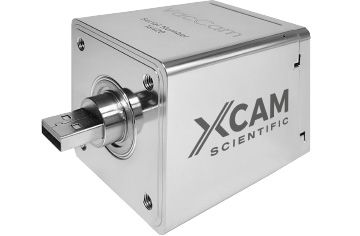
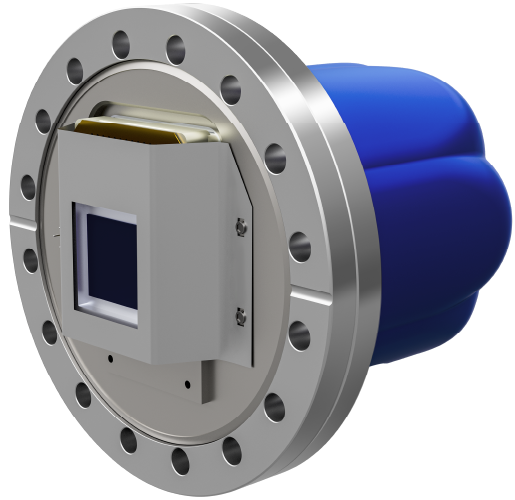
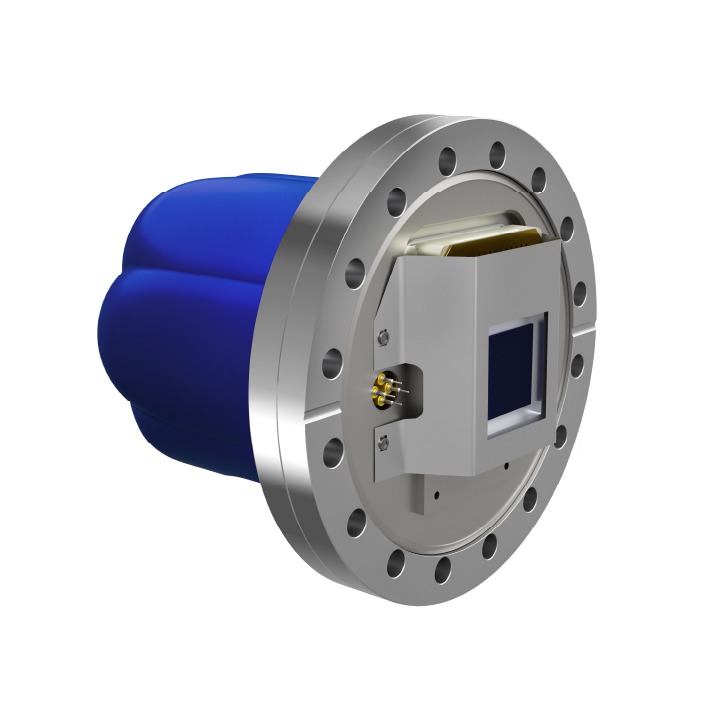
RIXSCam Mini is a high-precision x-ray detector designed for RIXS experiments, delivering single-photon detection with micron-level spatial resolution.
Ideal for scientists and researchers in synchrotron and x-ray spectroscopy facilities, it combines ultra-low read noise (~1e⁻ rms) with advanced centroiding algorithms for “super-resolution” imaging.
Fixed-angle Peltier cooling further reduces dark current and noise, making it a cutting-edge tool for both scientific and industrial applications.
allows measurement of low-energy x-rays, covering important soft x-ray absorption and emission lines.
enables extremely precise imaging of x-ray scattering patterns, allowing detailed analysis of fine spectral features and improving energy resolution in RIXS (i.e. spectroscopy) experiments.
detects individual photons, improving signal sensitivity and enabling experiments with very low x-ray intensities or low count-rate samples.
minimises detector noise, increasing the signal-to-noise ratio and allowing more accurate detection of weak signals.
increases quantum efficiency by allowing more photons to reach the active area of the detector, improving sensitivity.
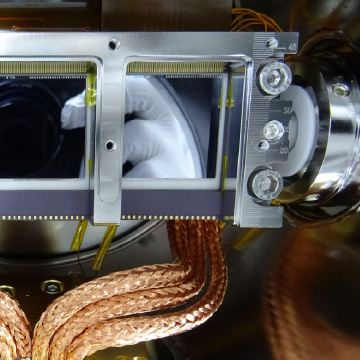
necessary for advanced x-ray experiments to avoid contamination and maintain beamline integrity.
captures more photons and wider scattering angles at once, reducing the need for multiple measurements and improving data collection efficiency (i.e. experimental run time and ultimately sample throughput).
minimises thermal noise to improve image quality and support longer exposures without signal degradation. This compact, low-maintenance Peltier cooling offers a practical alternative to cryogenic systems, and when combined with a single detector, it provides a cost-effective solution.
extends system lifetime and reduces long-term costs, allowing users to upgrade or replace the detector without buying a whole new system.
studying electronic excitations, magnetic properties, and charge dynamics in materials.
supports soft x-ray beamlines (250–3000 eV range).
investigating correlated electron systems, superconductors, and quantum materials.
The RIXSCam system was originally designed in collaboration with scientists at the Paul Scherrer Institute (PSI) for the Swiss Light Source ADRESS beamline. Utilising EMCCDs it enables single photon detection, increasing the intensity of photons detected, and operates 3x faster than previous systems while maintaining <1 e- RMS noise.
Centroiding technology combined with a unique algorithm developed by Paul Scherrer Institute gives this system an unbeatable spatial resolution, allowing energy to be resolved to an unprecedented degree.
RIXSCam builds on XCAM Scientific’s tradition of collaborative design, catering to the individual needs of customers who are working to the most demanding requirements, particularly where there is no existing solution available.
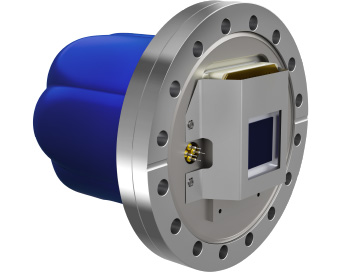
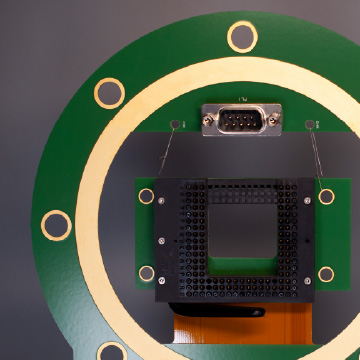
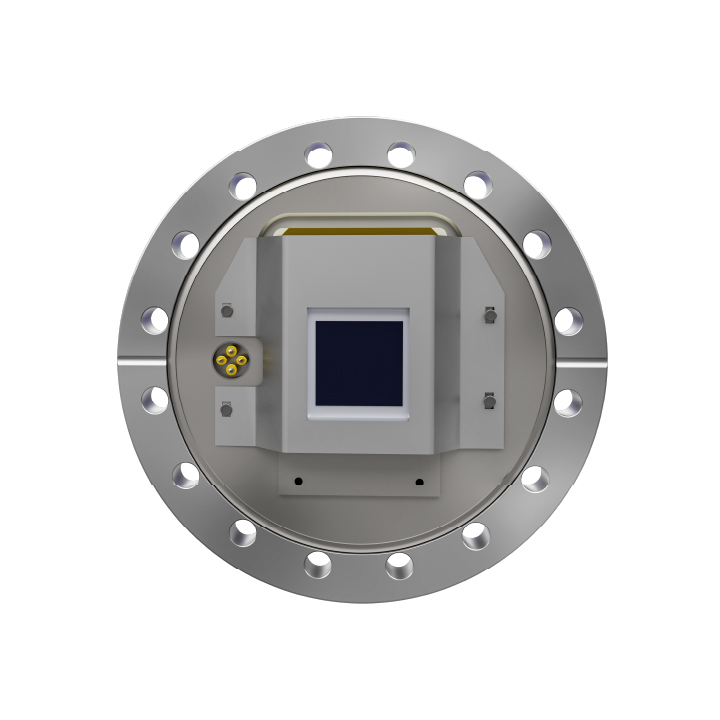
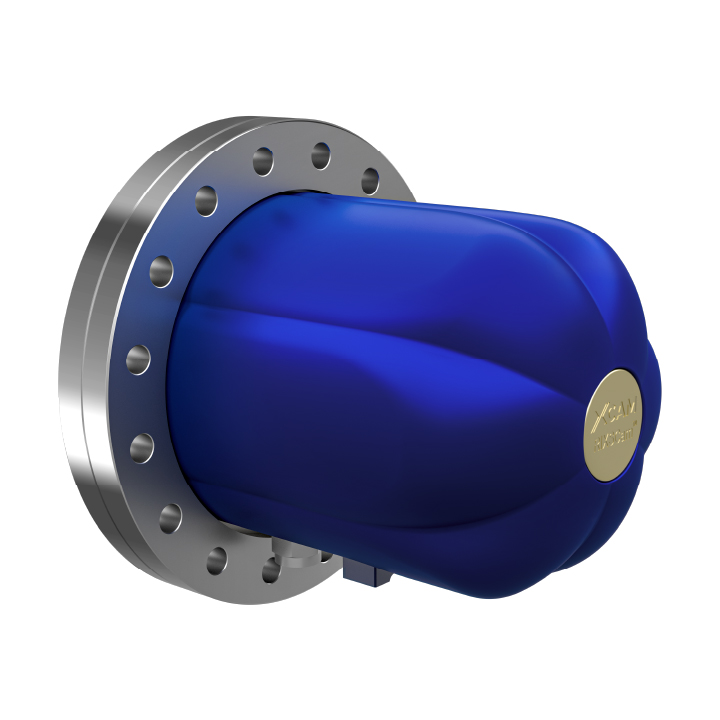
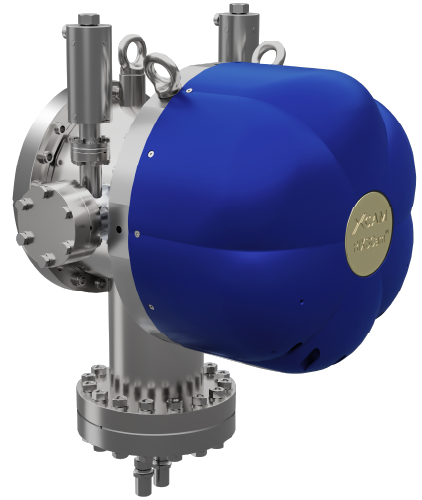
RIXSCam Mini camera head
“The RIXSCam Mini has proven to be a reliable detector for our ultra-high resolution RIXS measurements, offering impressive performance, especially its high spatial resolution, in a compact and reasonably priced format that is ideal for single-element applications.”
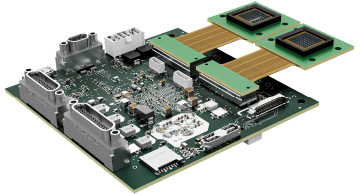
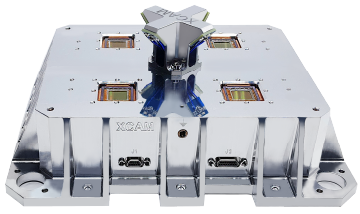
A multi-detector version for applications where higher throughput is required.
RIXSCam Mini is a high-precision x-ray detector designed for RIXS experiments, delivering single-photon detection with micron-level spatial resolution. Ideal for scientists and researchers in synchrotron and x-ray spectroscopy facilities, it combines ultra-low read noise (~1e⁻ rms) with advanced centroiding algorithms for “super-resolution” imaging. Fixed-angle Peltier cooling further reduces dark current and noise, making it a cutting-edge tool for both scientific and industrial applications.
The best energy resolution achieved with a RIXSCam to date is 16.1 meV, demonstrated by Dr Jun Miyawaki and colleagues at the NanoTerasu synchrotron in Japan. This milestone surpasses the previous record of 22 meV and represents a world-leading result for soft x-ray RIXS experiments. While this resolution reflects the combined performance of the detector and beamline optics, it highlights the RIXSCam’s capability to support cutting-edge, detector-limited spectroscopy at the highest experimental standards.
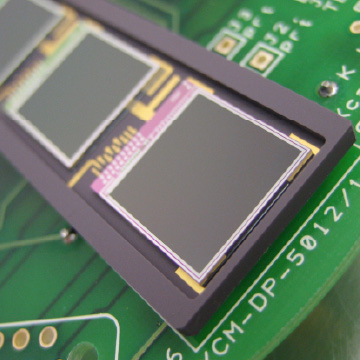
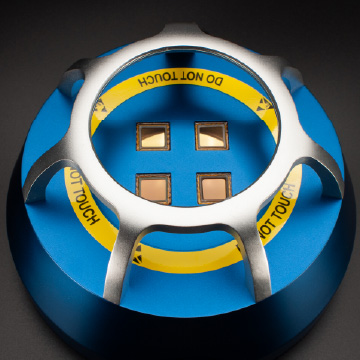
The RIXSCam uses a combination of high-performance back-illuminated EMCCD sensors, precise detector geometry, centroiding, and ETA correction algorithms to achieve resolution beyond the native pixel size. Each detected photon spreads across multiple pixels, and software calculates its exact position to a fraction of a pixel by finding its centre of gravity. This “sub-pixel” processing, combined with an angled sensor arrangement, allows spatial resolution several times finer than the physical 16 µm pixel pitch, down to around 3–5 µm under optimal conditions.
There are currently no fixed limits to the detector configurations available for the RIXSCam. Each system is designed and built to meet the customer’s specific experimental requirements, whether that means optimising for energy range, resolution, or detector area. With the larger RIXSCam system, configurations can include any number of EMCCD sensors, arranged to create larger imaging fields or custom geometries. In one instance, XCAM Scientific has even developed a RIXSCam system concept with 10 detectors for a customer demonstrating the system’s exceptional flexibility and scalability.
The RIXSCam can achieve extremely high spatial and spectral resolution, but its ultimate performance depends on the overall experimental setup. To reach true detector-limited resolution, all other elements in the system such as the spectrometer optics, beam stability, mechanical alignment, and environmental control – must meet or exceed the same precision standards. If any component in the experimental chain falls short, it will limit the achievable resolution, regardless of the detector’s capabilities. In essence, the RIXSCam performs at its best when integrated into an equally high-performance, well-optimised system.
Contact our sales team for further details, a quotation, or to discuss development opportunities.
2 Stone Circle Road
Round Spinney Industrial Estate
Northampton, NN3 8RF, UK
XCAM Scientific
2 Stone Circle Road
Round Spinney Industrial Estate
Northampton, NN3 8RF, UK