

RIXSCam

High performance photon counting camera to improve resolution of RIXS experiments

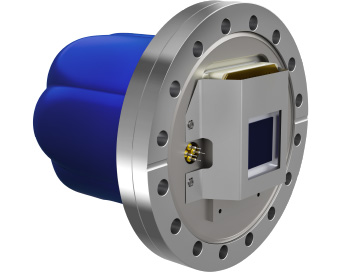
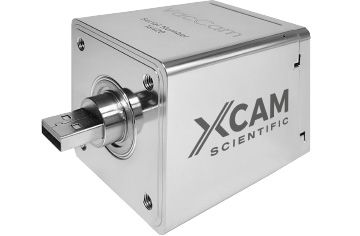
RIXSCam enables single-photon detection with exceptional spatial and energy resolution for scientists and researchers in the field of synchrotron radiation and x-ray spectroscopy; specifically, those conducting Resonant Inelastic X-ray Scattering (RIXS) experiments.

Features & Benefits

Soft X-ray Detection (250 - 3000 eV)

enables experiments across a broad range of soft x-ray energies, suitable for diverse material and chemical studies.

Exceptional <5 μm Spatial Resolution

provides highly detailed imaging and precise mapping of x-ray interactions for improved experimental accuracy.

Single Photon Detection

detects extremely low-intensity signals, increasing sensitivity and enabling studies of weak phenomena.

Sub-Electron Read Noise

reduces measurement noise, enhancing signal clarity and reliability of results.

User-Controlled Effective Pixel Size

allows optimisation of spatial and energy resolution for specific beamline requirements.

Variable Detector Angle of Incidence

improves spatial and energy resolution by adjusting the detector orientation to the x-ray beam.

Large Detector Area

captures multiple photons simultaneously, increasing throughput and reducing experiment time.

XHV-Compatible Manufacture

ensures compatibility with ultra-high vacuum environments typical of synchrotron beamlines and cryogenic operation.

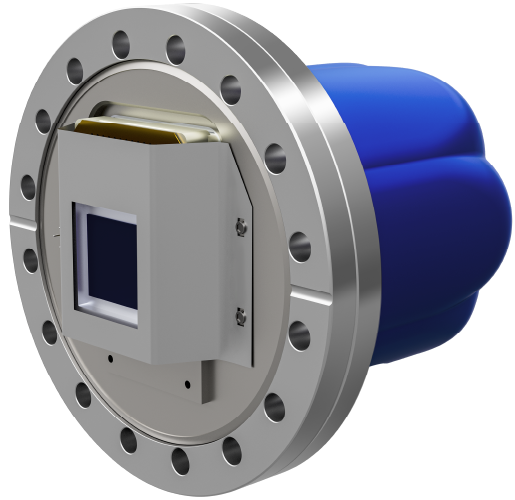
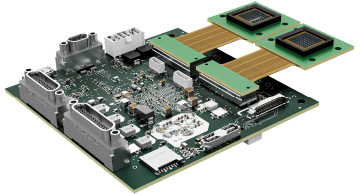
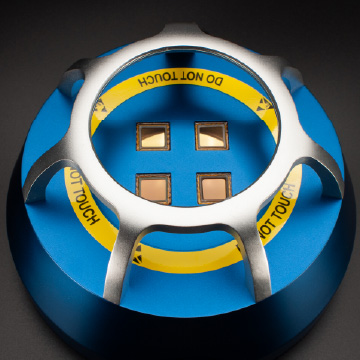
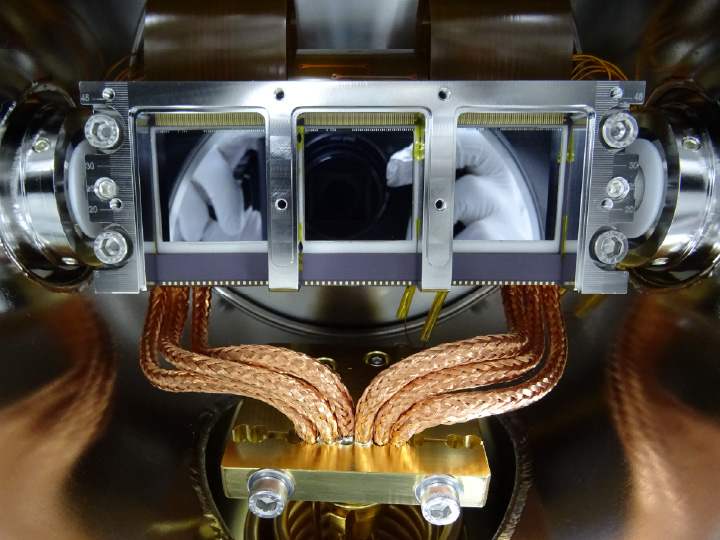
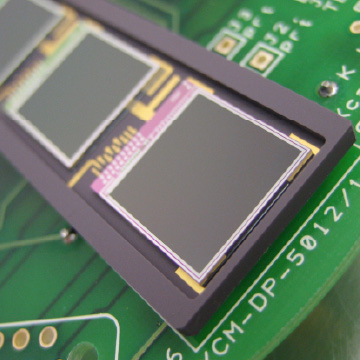
Up to 3 Back-illuminated EMCCD Detectors

increases photon collection efficiency and overall data quality, supporting high-throughput experiments.

Customisable to Individual Requirements

modular design adapts to unique experimental setups, providing flexibility for cutting-edge research needs.

Applications

Resonant Inelastic X-ray Scattering (RIXS) Experiments

high resolution mapping of electronic excitations in materials

Synchrotron Radiation Experiments

studies requiring precise detection of soft x-rays

“RIXSCam has allowed us to perform RIXS experiments with an energy resolution improved by about 30% and with triple the total intensity of the previously installed CCD camera.”

Paul Scherrer Insitute (PSI), Switzerland

Multi-EMCCD Large Detector Area System

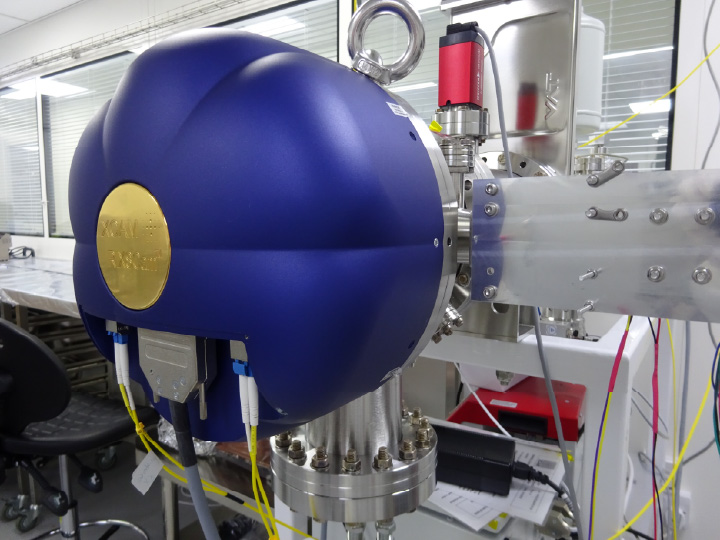
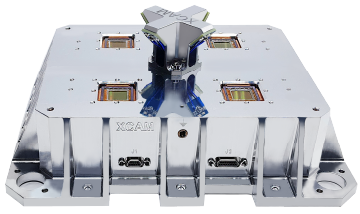
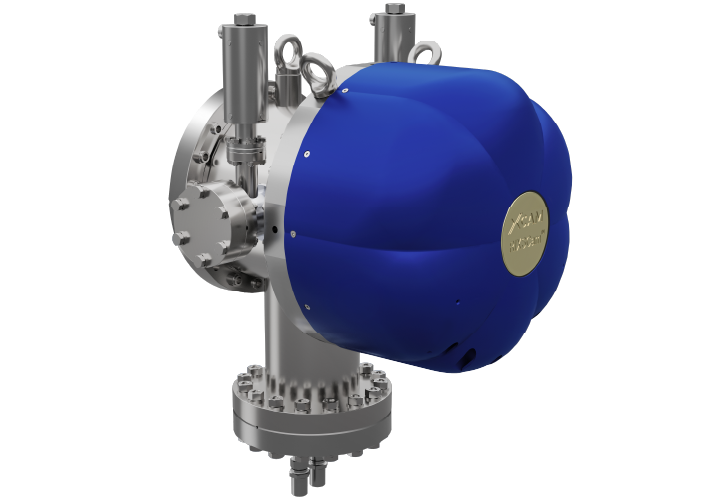
The RIXSCam system was originally designed in collaboration with scientists at the Paul Scherrer Institute (PSI) for the Swiss Light Source ADRESS beamline. Utilising EMCCDs it enables single photon detection, increasing the intensity of photons detected, and operates 3x faster than previous systems while maintaining <1 e- RMS noise.

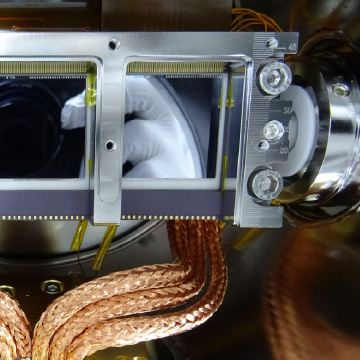
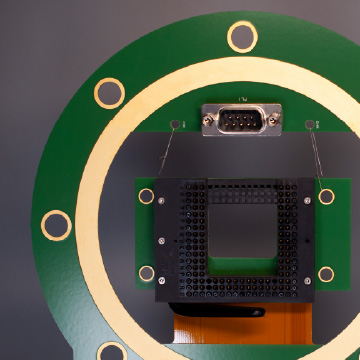
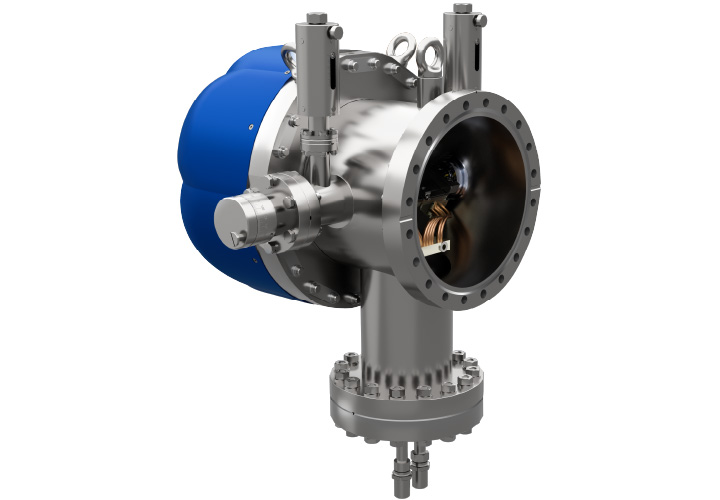
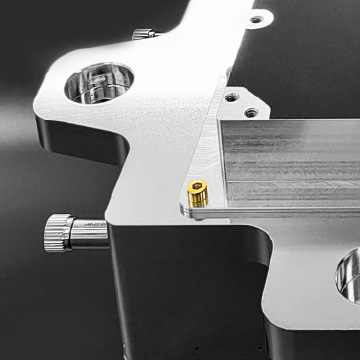
Centroiding technology combined with a unique algorithm developed by Paul Scherrer Institute gives this system an unbeatable spatial resolution, allowing energy to be resolved to an unprecedented degree. The rotatable detector bench, which holds up to three detectors, allows the operator to foreshorten the effective pixel size by changing the angle of incidence with the beam to further improve resolution.

RIXSCam builds on XCAM Scientific’s tradition of collaborative design, catering to the individual needs of customers who are working to the most demanding requirements, particularly where there is no existing solution available.

Image Gallery

Key Specifications

  • Maximum Active Area 78.33 x 25.73 mm
  • Active Pixels (H x V) 4896 x 1608
  • Pixel Size 16 x 16 μm
  • Readout Rate 3 MHz
  • Post-processed Resolution < 5 μm
  • System Noise - With Gain ≤ 1 e-
  • System Noise - No Gain ≤ 140 e-
  • Detector Incidence Angle 20° to 90°
  • Vacuum Compatibility 10-9 mbar
  • Temperature Control -110°C to -50°C

Further Reading

PSI Center for Photon Science; SLS - Swiss Light Source
Also consider

A single-detector version with the same spatial resolution performance for applications that don’t require high throughput.

FAQs

What is the RIXSCam and what applications is it designed for?

The RIXSCam is a multi-EMCCD large detector area system designed for single-photon detection and sub-pixel resolution in soft x-ray experiments, particularly Resonant Inelastic x-ray Scattering (RIXS), and synchrotron radiation experiments.

The best energy resolution achieved with a RIXSCam to date is 16.1 meV, demonstrated by Dr Jun Miyawaki and colleagues at the NanoTerasu synchrotron in Japan. This milestone surpasses the previous record of 22 meV and represents a world-leading result for soft x-ray RIXS experiments. While this resolution reflects the combined performance of the detector and beamline optics, it highlights the RIXSCam’s capability to support cutting-edge, detector-limited spectroscopy at the highest experimental standards.

The RIXSCam uses a combination of high-performance back-illuminated EMCCD sensors, precise detector geometry, centroiding, and ETA correction algorithms to achieve resolution beyond the native pixel size. Each detected photon spreads across multiple pixels, and software calculates its exact position to a fraction of a pixel by finding its centre of gravity. This “sub-pixel” processing, combined with an angled sensor arrangement, allows spatial resolution several times finer than the physical 16 µm pixel pitch, down to around 3–5 µm under optimal conditions.

There are currently no fixed limits to the detector configurations available for the RIXSCam. Each system is designed and built to meet the customer’s specific experimental requirements, whether that means optimising for energy range, resolution, or detector area. Configurations can include any number of EMCCD sensors, arranged to create larger imaging fields or custom geometries. In one instance, XCAM Scientific has even developed a RIXSCam system concept with 10 detectors for a customer demonstrating the system’s exceptional flexibility and scalability.

The RIXSCam can achieve extremely high spatial and spectral resolution, but its ultimate performance depends on the overall experimental setup. To reach true detector-limited resolution, all other elements in the system such as the spectrometer optics, beam stability, mechanical alignment, and environmental control – must meet or exceed the same precision standards. If any component in the experimental chain falls short, it will limit the achievable resolution, regardless of the detector’s capabilities. In essence, the RIXSCam performs at its best when integrated into an equally high-performance, well-optimised system.

For more information on the RIXSCam system

Contact our sales team for further details, a quotation, or to discuss development opportunities.

    XCAM Scientific

    2 Stone Circle Road
    Round Spinney Industrial Estate
    Northampton, NN3 8RF, UK
    Contact Us

    XCAM Scientific
    2 Stone Circle Road
    Round Spinney Industrial Estate
    Northampton, NN3 8RF, UK
    Phone:
    +44 (0)1604 673 700
    Email:
    sales@xcamscientific.com