

C3D CubeSat Camera

A space-qualified TRL 9 CubeSat camera and imager board with 100% successful space-flight heritage

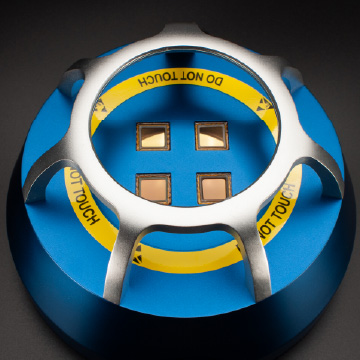
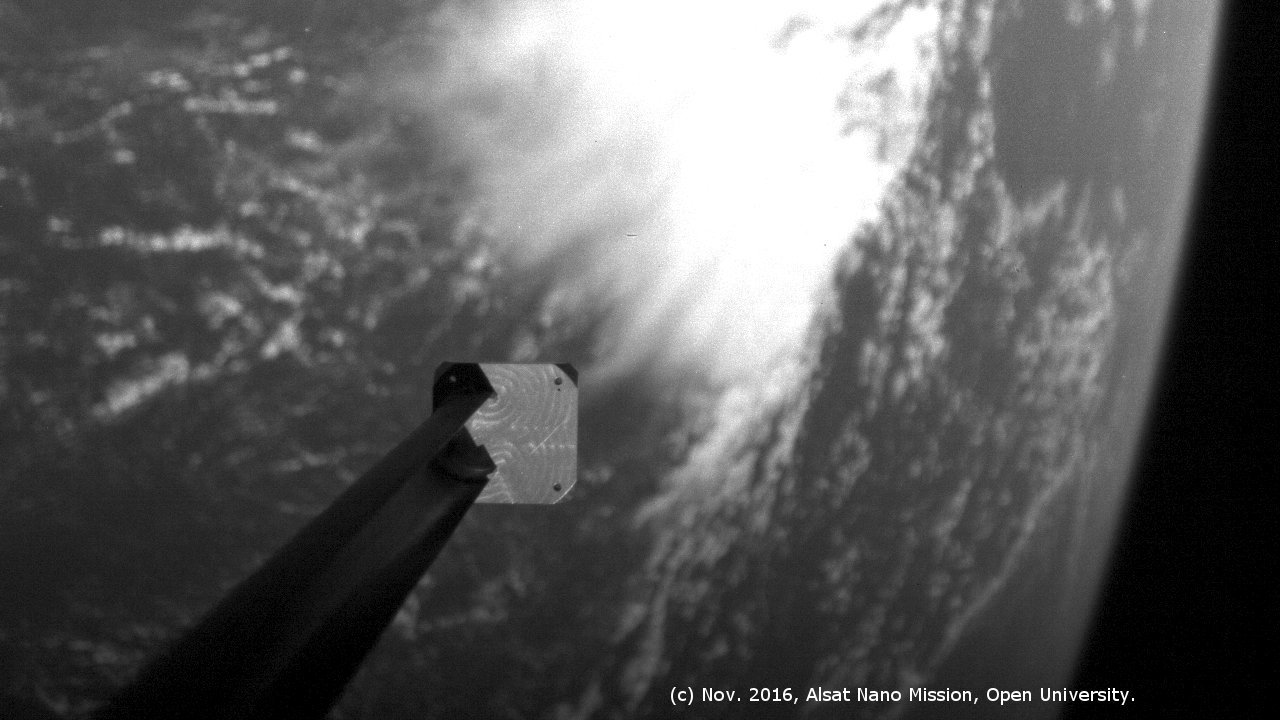
The C3D CubeSat Camera captures high-quality images from space for mission monitoring and analysis.

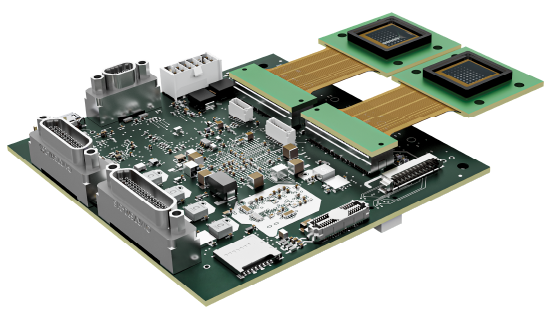
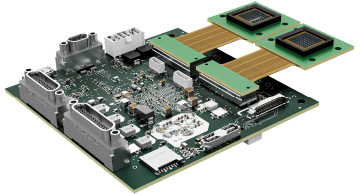
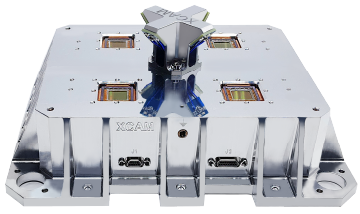
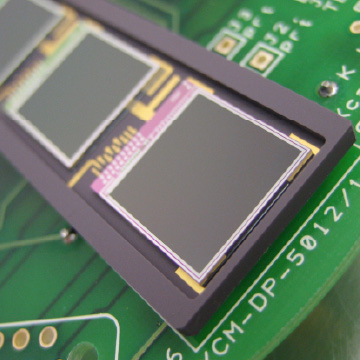
Designed for CubeSat applications, it features a modular architecture that supports up to three CMOS sensors for multiple fields of view or focal lengths.

With a proven space-flight heritage and a 100% success rate since 2014, it offers reliable, customisable imaging for cutting-edge space missions.

Features & Benefits

Modular Design

enabling customisability.

Wide Field Imaging (WFI)

offering rapid, broad area coverage.

Near-Field and Far-Field Imaging

delivers high quality images regardless of distance.

Both Monochrome and RGB Options Available

adaptable for individual customers application.

Lossless Image Compression

maintain perfect image quality with no data-loss enabling the storage and transmission of images with limited on-board resources.

Applications

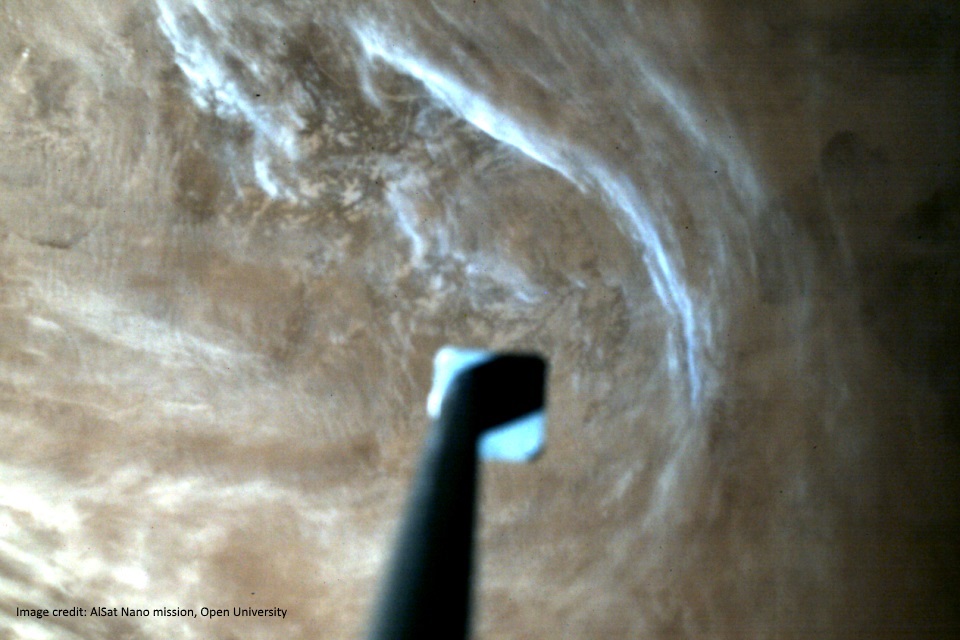
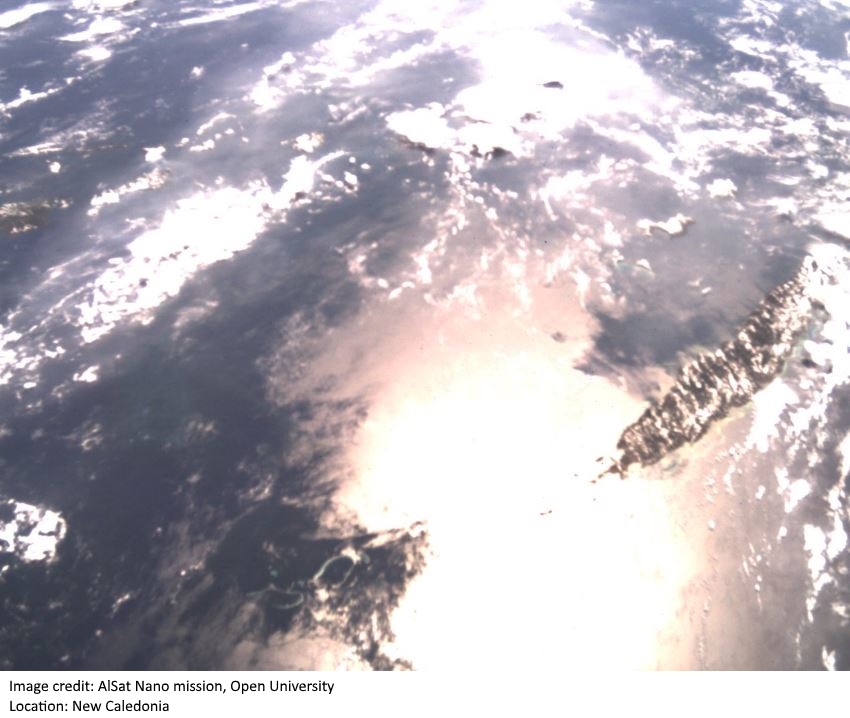
Earth Observation

wide-field imaging of Earth’s surface for monitoring land, oceans, vegetation, and weather.

Spacecraft Deployment Monitoring

capturing images of solar panels, antennas, booms, or CubeSat deployable after launch to verify successful deployment.

Educational / Training Missions

low-cost imaging payload for student CubeSats, offering proven, flight-ready equipment.

C3D Optical Configuration and Customisation

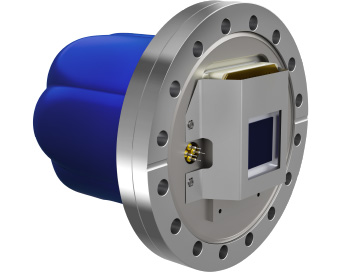
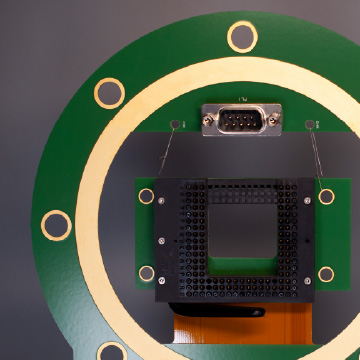
The C3D imaging platform offers a versatile optical configuration, enabling mission designers to combine multiple camera heads on a single imager board to achieve specialised imaging geometries such as stereo views, multi-angle capture, or differentiated focal arrangements. Its flexible sensor-to-optics interface allows each camera head to be equipped with its own lens assembly, supporting customised fields of view and mission-specific optical requirements.

In addition to the standard hardware, XCAM Scientific provides full custom-design and R&D support, enabling tailored optical layouts, alternative sensor choices, and bespoke mechanical integration for missions that require unique imaging capabilities.

Image Gallery

Key Specifications

  • Spatial Resolution @ 650 km 360 m GSD (with lens below)
    Other variants available
  • Image Sensor 1.3 MP CMOS, 5/4 aspect ratio
    RGB or B&W
  • Pixels 5.3 µm (1280 x 1024)
  • Lens Standard COTS lens 9.6 mm F/3.0
  • Wavelength Range 400 – 650 nm (RGB, extended with B&W)
  • Exposure Auto or fixed
  • Data Format 8-bit raw and thumbnail (1:10)
  • On Board Memory 16 MB SDRAM / 8 MB Flash
  • Image Compression 50% JPEG-LS (Lossless)
  • Data Interfaces I2C or SPI
  • Dimensions of Board 9.5 x 9.1 x 2.7 cm
  • Mass (Board + 1 x WFI) 85 g
  • Peak Power Consumption 845 mW
  • Operating Temperature -25°C to +65°C
  • Survival Temperature -35°C to +75°C (Tested)
  • Flight Heritage Since 2014

Further Reading

UK Space Agency‘s pilot programme to design and launch a (3U) CubeSat – a miniaturised (30x10x10 cm) satellite that will enable the UK to demonstrate new technologies in space.
A collaborative 3U CubeSat project between the Algerian Space Agency and the UK Space Agency aimed at demonstrating cost-effective new space technologies.
AAC Clyde Space delivered Mauritius’ first satellite, a 1U CubeSat (MIR-SAT-1), to the Mauritius Research & Innovation Council (MRIC) in 2021.
Also consider

The successor of the C3D CubeSat Camera – longer lifetime, higher duty cycle.

FAQs

What platforms and mission types is C3D designed for?

C3D is designed for CubeSats (1U and larger) and small satellites needing a flight‑proven, compact imaging payload. Typical mission uses include Earth observation (wide‑field imagery), spacecraft self‑monitoring (e.g. deployment, health check), radiation monitoring and experiment imaging.

C3D supports up to three camera heads per imager board. These cameras can be configured differently (e.g. wide-field vs narrow-field, colour vs black-and-white) and/or coaligned — enabling stereo imaging, different fields-of-view (near vs far), or redundancy depending on mission requirements.

The standard version uses a 1.3 MP CMOS sensor with 5.3 µm pixels and a COTS 9.6 mm F/3.0 lens. From a 650 km orbit, this yields a ground sample distance (GSD) of ~360 m for the standard wide-field option. Colour (RGB) or black-and-white imaging is supported; other optics variants may be available on request.

C3D’s imager board measures ~9.5 × 9.1 × 2.7 cm, with a mass of about 85 g (board + one WFI camera). It consumes low power) around 845 mW peak in the standard configuration) making it suitable for resource-constrained CubeSats. Data/control interfaces: I²C or SPI.

Yes – C3D has flown successfully on real CubeSat missions such as UKube‑1 (2014) and AlSat Nano, delivering images and, in later missions with the upgraded controller (C3D2), colour imagery and housekeeping/radiation‑monitoring data. Its flight heritage is documented, and it is considered a TRL 9 (flight‑qualified) product.

For more information on C3D CubeSat Camera

Contact our sales team for further details, a quotation, or to discuss development opportunities.

    XCAM Scientific

    2 Stone Circle Road
    Round Spinney Industrial Estate
    Northampton, NN3 8RF, UK
    Contact Us

    XCAM Scientific
    2 Stone Circle Road
    Round Spinney Industrial Estate
    Northampton, NN3 8RF, UK
    Phone:
    +44 (0)1604 673 700
    Email:
    sales@xcamscientific.com