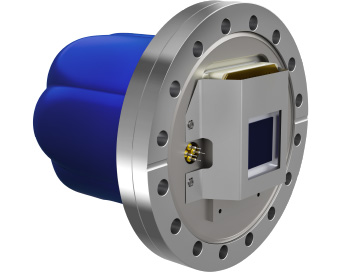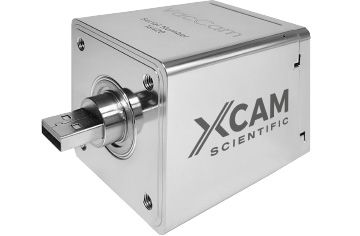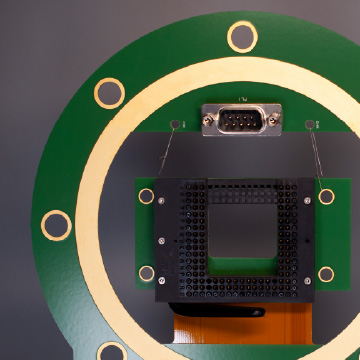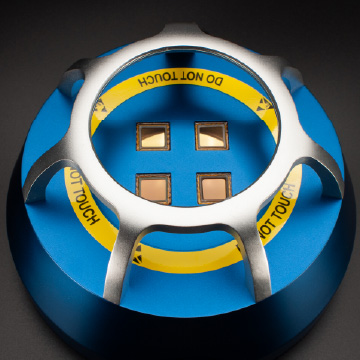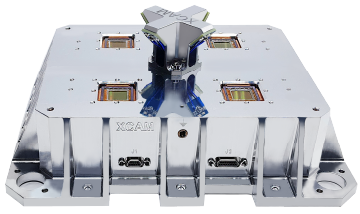



XCAM Ltd, based in Northampton, designers and manufacturers of specialized digital imaging systems, has joined a consortium of leading UK industry and academic partners, led by The Open University, to undertake a scoping study which will push the limits of leading CMOS TDI sensors and optimise system configuration to develop a new satellite platform for the classification, characterisation and monitoring of trees across urban and rural landscapes. The results from this study will inform and support a bid for full funding of the project.
Funded by the UK Space Agency, the study for the project, called TreeView, will transform the ability to measure, map and monitor the health of trees from space. The UK is leading the way in response to the global climate emergency, with a commitment for net-zero carbon emissions by 2050. A programme of significant tree planting for carbon sequestration and storage is planned by the UK government as part of this response, and applications in the emerging field of Precision Forestry such as TreeView will be crucial to the success of these initiatives. The satellite’s goal, if successful, will be to provide information on the level of tree planting, and the health and management of trees across urban and rural landscapes, providing vital data to governments, industry and third sector organisations.
Karen Holland, CEO of XCAM explained further, “We are delighted to be part of this scoping study over the next four months and look forward to hopefully designing and building the complex imager required, should the project succeed to the next stage of funding. In this first feasibility stage, we will be evaluating the imager system requirements and available technology, develop a suitable imager design concept and cost up towards building the imager, and preparing it for integration and subsequent launch.
XCAM Ltd, celebrating 25 years in business, is currently experiencing significant growth in sales from around the world, with its busiest year ever, including new contracts with the European Space Agency (ESA) and several highly prestigious innovation award nominations. The success is based on its worldwide reputation and outstanding knowledge in the field of digital imaging systems, including the ability to solve complex problems.
TreeView is led by Kadmiel Maseyk from the School of Environment Earth and Ecosystems and involves the Next Generation Multi-Media Group from Computing and Communications, and the Centre for Electronic Imaging. The external partners are XCAM Ltd, In-Space Missions Ltd, RAL Space, Teledyne e2v, Forest Research, the Centre for Ecology and Hydrology, Grey Consultants Ltd and 2Excel-geo.
http://www.open.ac.uk/research/news/new-research-funding-measure-trees-space
Following successful trials of a prototype sensor, space-tech company XCAM is working with ESA to develop a flight-ready device that monitors dust contamination on payloads during and shortly after launch.
The device will provide data to demonstrate whether or not precious cargos – such as Earth-observing satellites – stay clean on their way into space.
Payloads are protected from the elements within a secure capsule in the upper part of launcher called the fairing. Once outside the Earth’s atmosphere, the fairing separates, exposing its contents to space.
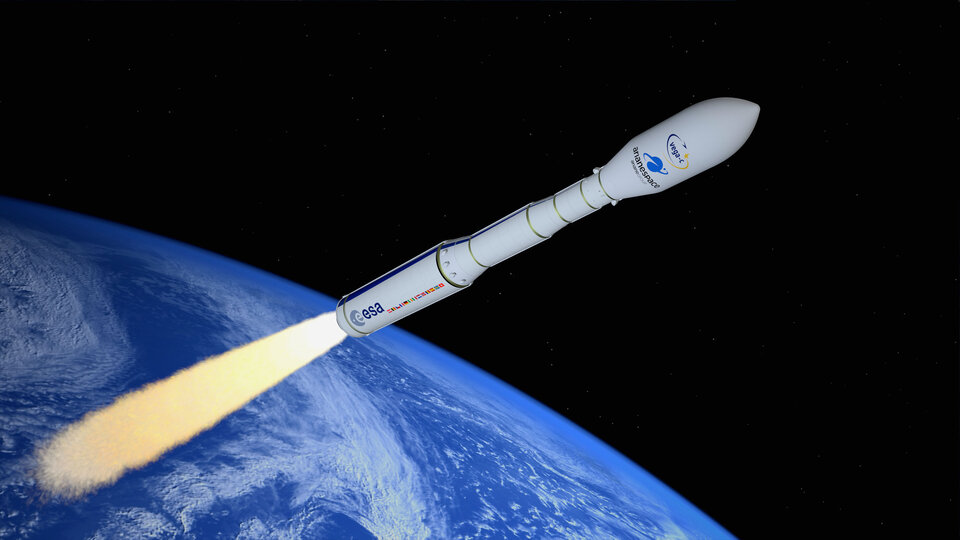
Cleanrooms protect spaceborne equipment from contamination during assembly, but vibrations and shocks during launch may shake up residues in the fairing that can affect how the payload operates.
Dust particles can contaminate optical surfaces, such as those found on Earth-observing satellites, as well as affecting the performance of sensitive mechanical equipment.
XCAM’s sensor keeps track of contamination remotely to provide continuous measurements in real-time.
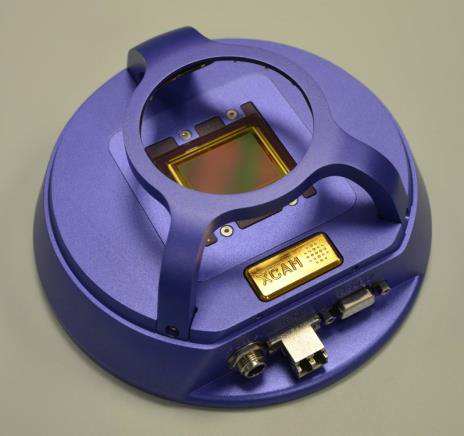
The company is now working with ESA to develop a device that will be used in the fairing of the European Vega-C launcher. The gadget must be able to withstand the mechanical loads of launch such as acoustics and vibrations – and then survive in space for long enough to relay data back to Earth for analysis.
It will enable satellite launchers to provide evidence to their customers that payloads are kept spotless on their way into orbit.
“It was fantastic for XCAM to work on such an exciting project with ESA at the prototype stage, but to have been able to go beyond that, and win the contract to develop the flight qualified system is even better,” says Karen Holland, chief executive of XCAM.
“Following these achievements, XCAM has recently received several highly prestigious awards nominations for our work in the field of digital imaging systems. As a very small company of just 15 people, we are very pleased to be recognised by the awards judges.”
“Because of the very peculiar contamination mechanisms it presents, and the lack of monitoring inside the fairing, the launch phase is somewhat of an unresolved question for contamination engineers – which makes control of particulate very challenging,” says Riccardo Rampini, technical officer for the XCAM project.
“With the development of a novel sensor capable of operating before and during launch, which will provide real-time information on the particulate inside the fairing of a launcher, ESA will soon provide a solution to this problem.”
See the full ESA press release covering the item.
Northampton based XCAM, is celebrating 25 years in business with several highly prestigious innovation award nominations. The company, designers and manufacturers of specialized digital imaging systems for challenging scientific, environmental and space applications, has also seen a significant growth in sales, including new contracts with the European Space Agency (ESA).
XCAM are finalists in the National SME Business Awards 2020 for the Business Innovation Award category. Shortlisted for the Northampton SME Business Awards 2020 in the Business Innovation Award category and shortlisted for the 2020 Manufacturing Innovation Award for its space cameras at the Business Insider Made in the Midlands Awards (XCAM won this award in 2017).
Karen Holland, CEO of XCAM is delighted by the outstanding achievements “I am really proud of the whole team, for all the hard work and the dedication they have contributed. Who would have thought 25 years ago, setting up the business in our spare room at home, that now we would be in a 7,000 sq. ft building with two clean rooms, have 15 staff and approaching 1.5 million turnover all through organic growth.”
The company’s significant growth in sales and busiest year ever, has been based on its worldwide reputation and outstanding knowledge in the field of digital imaging systems, including the ability to solve complex problems.
Some years ago the ESA, decided that they were not satisfied with existing technologies for Particle Fall-Out (PFO) monitoring and they wanted to develop a new instrument that could measure contamination all the time, remotely, and without human intervention to give continuous measurements. XCAM won the competitive tender to develop a novel prototype instrument which was delivered in 2017. This provided the background to the achievements of the last 12 months.
In January, XCAM signed a new follow-on contract with the ESA to start development of flight-qualified units over the next 2 years. This will involve them developing a unit which is not only suitable for surviving the unfriendly launch conditions which the Arianespace Vega launcher will subject the unit to, but which can also survive in space for long enough to send the launch data back down to the earth for later analysis. The new instrument, will measure particulate fall-out inside the rocket environment during a real rocket launch and provide ESA with critical information about the launch environment which their payloads experience – information which ESA has never previously had access to.
Rocket launchers currently have no way of providing evidence to their customers that they keep the customers’ payloads clean during and shortly after launch, despite charging large sums to launch their payloads. The potential for XCAM to ultimately sell flight-qualified units, for launchers to prove their environments is huge.
Medilink press release covering the item.
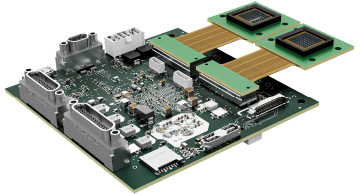
A bespoke headboard, designed by XCAM to drive a custom CCD image sensor for the Ultraviolet Visible Near-infrared (UVN) instrument aboard the European Space Agency’s Sentinel-4 satellite mission has been successfully delivered to ESA. The mission aims to monitor trace gas concentrations and aerosols in the atmosphere from a geostationary orbit above Europe, in order to support the provision of real-time air quality and climate monitoring as part of the European Commission (EC) and ESA’s Earth Observation Programme, Copernicus.
Following intial discussions between XCAM and ESA to understand the scope of the work, a proposal was generated outlining the specifications and work to be undertaken by XCAM for successful delivery of the headboard.
The work which was carried out began with XCAM designing, in conjunction with ESA, the mechanical format of the headboard, the technical specification and requirements of the headboard, and the associated cables required to interface to the cryogenically-cooled test chamber and the Archon controller which was to be used. Next XCAM drew up the headboard circuit schematic, and after approval from ESA, designed the printed circuit board layout for the headboard. After manufacture of the headboard and all cables, XCAM used a grade 5 detector, loaned by ESA, to design the sequencer program which operated the clocks of the detector, and to test that all aspects of the system were fully working. The system, once fully tested, was delivered to ESA with a test report detailing operation of the system.
The delivery of the Sentinel-4 headboard represents a continuation in the design and supply of bespoke image sensor headboards for space applications by XCAM, following previous successes such as headboard design for ESA’s Euclid mission. Contact XCAM today to discuss how we may be able assist with your CCD- and CMOS-based imaging solutions.
Michael, a third year undergraduate Engineering master’s student from the University of Warwick, has spent his summer undertaking an internship at XCAM. As his internship comes to an end, here’s what Michael had to say about his experience:
“My time at XCAM has been both thoroughly enjoyable and a highly educational experience. The knowledge and skills I have acquired over these past six weeks from professional engineers are invaluable. The team at XCAM are like a family and I always felt welcome working alongside them. I started this internship expecting only to be working on FEA simulations of a PFO monitor to aid in its flight qualification, but have in actual fact been involved in a variety of projects ranging from designing a rig for testing the quantum efficiency of CMOS sensors, to researching ESA’s different launchers to aid the design of the PFO sensor.
Although I am now well versed on ESA’s launch systems and procedures, the majority of my time here has been spent designing a new iteration of the PFO monitor, which is intended for eventual space-flight. Creating this 3D model has expanded my knowledge of real-world engineering and faced me with practical challenges, the likes of which are not often encountered in academia. Whilst I tried to be as independent as possible, help was always at hand in the form of my fellow engineer Fraser, whose SolidWorks expertise was always available. I had never considered some of the technicalities that must be considered when designing a device for space, such as having to vent all screw holes to allow trapped air escape. Designing a model of such detail is something I have never previously done. It required me to not only pull from my mechanical engineering knowledge, but also forced me to learn some electronic engineering, something I have previously had little experience with.
I am grateful to the entire XCAM team for having me these past six weeks, but especially so to Karen, XCAM’s CEO, for giving me this opportunity, and to Fraser for vastly improving my SolidWorks skills.”
Michael will return to the University of Warwick in September to complete the final year of his undergraduate studies where he will be working on the School of Engineering’s WUSAT cubesatellite mission, a three-unit Cubesat to be launched into Low-Earth Orbit via the International Space Station with the objective of monitoring wildlife movement patterns. XCAM are collaborating partners to the WUSAT team following an introductory meeting earlier this year; we look forward to following the progress Michael and the rest of the team make over the next academic year.
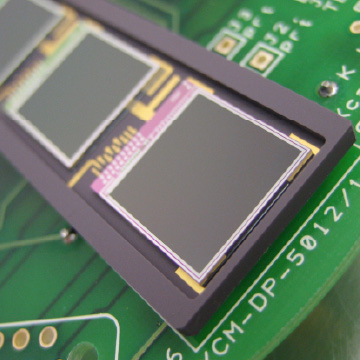
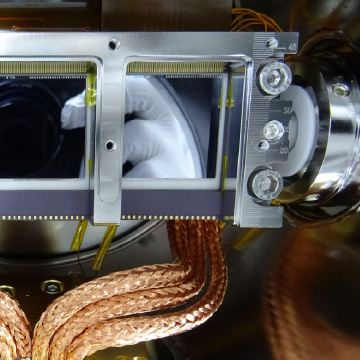
The single-detector RIXSCamTM Mini system developed by XCAM has been launched at the 13th International Conference on Synchrotron Radiation Instrumentation (SRI 2018) in Taiwan. The system uses the same EMCCD detector as the successful, multi-detector RIXSCamTM system with modifications to provide a more cost-effective solution for RIXS beamline scientists who do not have the same high-throughput requirements intended for the original triple or double-detector RIXSCam™ system. Furthermore, the system has been designed to enable the detector to be replaced if it becomes damaged in-use, providing a long-term, economical solution for RIXS experiments.
A poster presentation was given at the conference to announce the launch of the single-detector system and to present some intial results from the first ever RIXSCamTM triple-detector system, designed by XCAM in conjunction with scientists at the ADRESS synchrotron beamline at the Paul-Schrerrer Institute (PSI) in Switzerland. Initial results from the RIXSCamTM at PSI show a 30% increase in energy resolution due to the system’s innovative use of a centroiding algorithm, which also takes into account pixel edge effects, providing sub-pixel resolution which has allowed previously unresolved magnon excitations to be resolved.
For more information about XCAM’s family of RIXSCamTM camera systems please visit the RIXSCam™ webpage, or submit an enquiry by visiting the contact us page or emailing sales@xcam.co.uk.
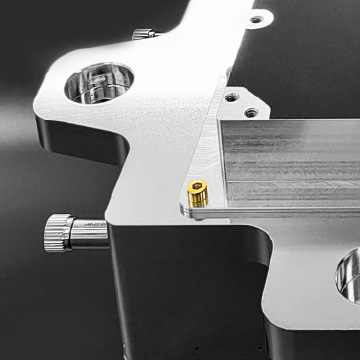
Today at the 2018 Cleanroom Technology Conference, XCAM Ltd. announce the launch of the PFO 1040 real-time surface particulate contamination monitoring system. Live demonstrations will be performed at XCAM’s exhibition booth at the conference where customers are invited to register their interest for the purchase of a PFO 1040 unit, which can also be purchased via the XCAM website for those unable to attend.
Time-Resolved Automatic Particulate Monitoring
The PFO 1040 offers cleanroom operators a novel solution to tracking particulate contamination down to the five-micron level by using a robust and reliable direct imaging technique (patent pending). A bespoke algorithm analyses particles and fibres which settle on the 4 cm2 sensor surface and reports information such as size, shape, particle/fibre classification and particle size distribution, as well as allowing individual particulates to be interrogated within the resulting image. This method allows sample rates of 10 measurements per hour, allowing contamination events to be reported in real-time and consequently improving manufacturing processes and production yields. The automatic nature of the instrument reduces costs as it removes the need to retrieve and analyse samples manually, with the additional benefit of the instrument performing in-situ analysis which minimises disturbances to samples allowing a representative snapshot of particulate contamination levels. Particulates are particularly problematic for the aerospace, semiconductor and automotive industries to name a few where the powerful features of this instrument have the potential to disrupt current best practices in the field.
“We’re really excited about the release of our latest innovative product. The PFO 1040 has the potential to provide cleanroom operators with a new high-resolution, real-time method of measuring particulate deposition levels, as well as getting far more information regarding particulate types. This will enable detailed tracking and investigation of contamination trends, allowing processes to be improved and yields increased, whilst reducing labour costs.” said Karen Holland, CEO at XCAM.
Spin-off from European Space Agency (ESA) Contract
The initial concept for the PFO 1040 instrument was born out of a need for the space industry to develop a real-time, continuous and remote method of tracking particulate contamination produced within the fairing of a rocket, and around sensitive instruments, prior to and during the launch phase. Characterisation of the particulates would allow sources to be identified and failure analysis to be performed, as well as the monitoring of particulate levels relative to contamination budgets. The European Space Agency therefore funded a contract for the development of such an instrument which XCAM Ltd. Successfully bid for and won. The contract successfully came to completion in January 2017. Recognising that there was a need for such an instrument in terrestrial-based clean rooms and following on from the success of the ESA prototype Space PFO monitor, XCAM undertook developments to adapt the ESA prototype for commercial use in clean rooms.
PFO 1040 Availability
PFO 1040 is now available by submitting an enquiry via the XCAM website or by e-mailing the XCAM Sales Team at sales@xcam.co.uk.
Visit the PFO 1000 series product page for more information
The experiment controller board developed by XCAM for the CAPSA cold atoms cubesat payload project was successfully delivered to the QT Hub for Sensors team at the University of Birmingham by XCAM engineers Friday. The experiment controller was fully functional upon its first iteration with all control modules and current sources operating as intended.
This signifies another key milestone achieved by XCAM in relation to the Teledyne e2v led, Innovate UK-funded project. Other key subsystems which will eventually make up the cold atom payload are under development, to be integrated with the XCAM controller soon. Therefore a series of operational tasks were performed in order to simulate the signals from the other subsytems and test the experiment controllers ability to read back the measurments and acquire images via XCAM’s existing TRL9 C3D imager (successfully delivered previously in the project), as if the cold atom experiment were fully operational. Teledyne e2v engineers were present to witness the testing and brought an ion pump controller along which the experiment controller was successfully able to operate and return a pressure value for.
This represents a significant achievement for the XCAM team having successfully delivered a complete working system in just six months since the specification for the CASPA payload was finalised. The work XCAM engineers undertook included drawing up a circuit schematic, getting the PCB circuit board designed and manufactured, testing, and integration with the existing C3D imager controller. The C3D imager controller will also undergo further development to a new version based on the previous system flown on the AlSat Nano CubeSat mission, and will be deliverd in 6 months time with the final system delivery. These developments include updated components, increased on-board memory, a USB 2.0 interface for fast and easy lab testing, and a faster SPI over LVDS interface which will allow C3D to capture and transfer images in video mode.
The CASPA project aims to develop a 6U cubesat payload capable of producing and maintaining a cold atom experiment in space with the potential to measure tiny changes in Earth’s gravitional field. Read more about the CASPA project in our previous article here.
For more information about XCAM’s C3D cubesatellite imager please visit the C3D product webpage, or visit the contact us page to submit an enquiry.
Eliot, a Theoretical Physics undergraduate student from University of Birmingham, is now in the final week of his eight-week summer internship working at XCAM. Eliot has made a great addition to the XCAM team during his time here. Here’s what he had to say about his experience:
I’ve had a very enjoyable experience at XCAM, learning a lot about what it’s like to work at a technology business whilst also developing my computing/electronics skills. Everyone was welcoming and fun to work alongside, and as a small business there is a relaxed atmosphere – I was also here for the annual golf tournament which I had a great time at despite my lack of skill!
The main project I worked on during my eight weeks was to develop Python code to control the OGRE camera system. This involved converting pieces of code from other languages, and putting it all together into a program which can be used to get images from the camera. It was interesting to learn how the OGRE system operates, and undertaking a programming project of this scale has given me confidence developing code in the future. Additionally, I had the chance to help make some posters/ information sheets about the projects XCAM is working on (including OGRE). This acted as a break from coding, and helped me learn more about what XCAM does.
One of the biggest challenges was testing and debugging the code I’d written, as communicating with hardware isn’t something I’ve had much experience with. Independent research was encouraged, which is good practise to have, but help was available if needed. I applied for this internship because I was interested in learning more about scientific computing whilst also contributing to some innovative science – OGRE will be demonstrating a style of instrument that could potentially go on to search for baryonic filaments between galaxies. I’m very grateful to XCAM for giving me this opportunity, thank you!
Thanks, Eliot, for your all your hard work and contributions! Good luck with the rest of your studies!
Position Sensitive Detectors 11 is a multi-disciplinary, international conference which brings together researchers from both industry and academia to encourage cross-fertilisation and the transfer of ideas between different fields. It will feature a variety of sensor applications which could range from the use of EMCCDs in RIXS experiments for synchrotron beamline scientists such as with XCAM’s RIXSCam system, to novel new techniques such as XCAM’s PFO 1000 Monitor. This year’s event, organised by the Open University in Milton Keynes, is taking place from 3rd – 8th September 2017 and has a strong focus on detectors in industry.
The industrial exhibit will be taking place in the first two days of the conference; XCAM will be in attendance both at the exhibition booth, and with two talks being given by XCAM employees relating to XCAM’s RIXSCam and PFO 1000 systems. There will also be a talk from an XCAM sponsored student within the OU’s research group who will be presenting work relating to the OGRE system, a NASA-funded sounding rocket project for space for which XCAM is developing the camera system.
We look forward to hopefully seeing you at our exhibition stand!

XCAM Scientific
2 Stone Circle Road
Round Spinney Industrial Estate
Northampton, NN3 8RF, UK