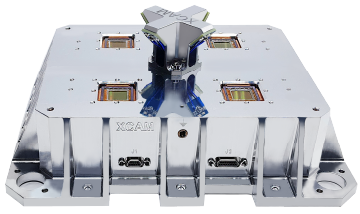



At XCAM Scientific, we specialise in imaging the impossible. For over 30 years, we’ve developed advanced imaging solutions for the world’s most demanding environments. Today, that expertise is helping enable a new generation of space exploration.
On May 19, 2026, the SMILE mission (Solar Wind Magnetosphere Ionosphere Link Explorer) is scheduled to lift off. This historic international project—a collaboration between the European Space Agency (ESA) and the Chinese Academy of Sciences (CAS)—aims to solve one of the great mysteries of space weather.
The Mission
SMILE (Solar Wind Magnetosphere Ionosphere Link Explorer) will use four science instruments to study how Earth responds to the solar wind from the Sun. This will improve our understanding of solar storms, geomagnetic storms and the science of space weather.
XCAM Scientific’s Role in the ESA SMILE Mission
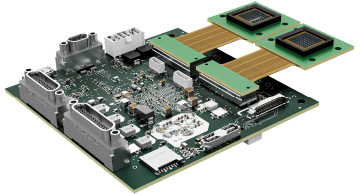
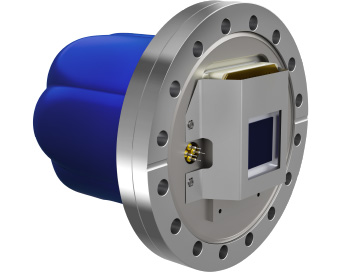
XCAM Scientific played a vital role in supporting the SMILE mission through the design and manufacture of advanced characterisation electronics for the imager detectors.
Used extensively during ground-based testing and calibration, these systems enabled teams to rigorously assess detector performance under demanding conditions, including radiation testing campaigns. This ensured the detectors were finely tuned and fully prepared for their journey into space.
XCAM Scientific’s characterisation electronics are engineered for flexibility and precision, allowing users to adjust bias voltages and control signals with exceptional accuracy. This capability provides deep insight into detector behaviour, supporting optimisation at every stage of development.
By delivering the tools needed to thoroughly test and refine detector performance, XCAM Scientific helped lay the groundwork for the mission’s success—demonstrating expertise in high-performance imaging technology and innovation.
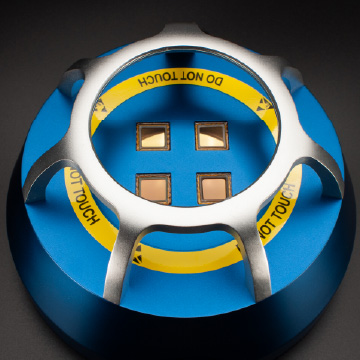
This month, XCAM visited Brookhaven National Laboratory to commission our newly delivered RIXS camera system (RIXSCam) at the National Synchrotron Light Source II (NSLS-II). The system marks a significant milestone as the first triple-EMCCD, Peltier-cooled camera installed at the facility.
Following delivery, the camera was unpacked and inspected to confirm cleanliness, verify CCD integrity, and ensure no shipping damage, before undergoing initial functional checks. The team also assessed the suitability and cleanliness of Brookhaven’s test chamber, where the camera was temporarily installed to carry out site acceptance testing (SAT). All tests were successfully completed at operating conditions using the supplied EPICS control software. Upon customer approval, the system was then installed on the beamline.
Designed to operate at 10 MHz, the RIXS camera significantly increases data throughput on a Resonant Inelastic X-ray Scattering (RIXS) beamline, supporting faster, higher-quality measurements for advanced materials research.
During the visit, the team also checked on a previously delivered orange RIXSCam (affectionately known as “the pumpkin”) which continues to perform reliably since its installation in 2016, underlining the long-term robustness of XCAM’s imaging solutions.
For more information, please enquire at info@xcam.co.uk.
Following the successful completion of Phase 1, CEOI has extended its funding to support the next stage of development of a flight-ready, ultra-low-noise camera system for Earth observation — enabling high-quality imaging even in extreme low-light conditions.
This technology has the potential to unlock new insights for climate science, environmental monitoring, and next-generation satellite missions
Read the full article: https://ceoi.ac.uk/2025/12/09/ceoi-extends-grant-to-xcam-to-advance-next-generation-earth-observation-camera-system/
Northampton, UK and Dublin, Ireland, Tuesday, Dec 16th – Tibidabo Scientific Industries Ltd (“Tibidabo”), a global leader in advanced imaging technologies for the scientific, space, and industrial markets, is delighted to announce the acquisition of XCAM Scientific Ltd (“XCAM”), a world-class developer of complete camera systems, with demonstrated history in vacuum-compatible applications and large-area, multi-detector solutions. This strategic milestone builds on XCAM’s distinguished heritage and reinforces Tibidabo’s commitment to advancing next-generation imaging.
Paul Murtagh, Chairman & CEO of Tibidabo, said, “We are thrilled to welcome XCAM Scientific into the Tibidabo group. Their world-class expertise in custom imaging solutions, space-qualified camera systems, and mission-critical cameras is an excellent complement to our portfolio and will enable us to push the boundaries of what is possible in space science and advanced instrumentation.”
Karen Holland, CEO of XCAM, added “Joining Tibidabo provides exciting opportunities to scale our business and collaborate across a more globally integrated team. We look forward to contributing our technical expertise and advancing the deployment of our imaging systems across both current and future space missions, while leveraging Tibidabo’s global reach, commercial infrastructure, and shared commitment to innovation and advancing science.”
XCAM has established a strong track record in delivering bespoke imaging systems for high-impact space missions. Recent achievements include advanced EMCCD technology for NASA’s OGRE mission, a high-performance camera for the WindCube “CubeSat” to measure thermospeheric winds in partnership with UCAR, and ESA’s forthcoming Particle Fallout Monitor for Ariane 6 to safeguard payload integrity. XCAM also supplied electronics and controllers for the C3D2 camera on the AlSat Nano CubeSat Mission, successfully demonstrating operational performance in orbit and increasing the TRL of its space-qualified electronics.
In addition, XCAM has secured significant support from the UK Space Agency (UKSA) and the Centre for Earth Observation Instrumentation (CEOI), enabling the development of ultra-low-light, CubeSat- compatible camera systems and strengthening international partnerships, including mission collaborations with ISRO.
About XCAM Scientific
Headquartered in Northampton, UK, XCAM Ltd has more than 30 years of experience delivering innovative CCD- and CMOS-based solutions for the most challenging imaging applications. In addition to a portfolio of standard products, XCAM is a recognized leader in the design and manufacture of complete camera systems, with proven expertise in vacuum-compatible technologies and large-area, multi-detector solutions. Their imaging systems are deployed across space, scientific, and industrial programs worldwide. For more information on XCAM products and applications, please visit https://xcamscientific.com/
About Tibidabo Scientific Industries
Tibidabo Scientific Industries is a global leader and supplier in highly differentiated technology for scientific research, aerospace, and industrial markets. We succeed by helping customers push boundaries in radiobiology, stem cell research, high-performance imaging, radiation detection, surveillance, space exploration and advanced scintillators. With our roots dating back to H2S phosphor screens in radar critical to the Allied defense during World War II, the impact of our products is now felt from the deepest recesses of the earth to the far reaches of space. Our collaborative approach and expanding global team enable our customers to make smarter decisions and adopt more effective solutions with ground-breaking technologies. For more information on Tibidabo Scientific Industries’ global presence, please visit https://tibidaboscientific.com/
To coincide with our attendance at the Small Satellite Conference in Logan, Utah this week, we’ve produced a mini-newsletter providing a round-up of our current portfolio of Nuscis Space Imaging Systems, including some of the applications that this system can be implemented for. Follow the link below to find out more:
XCAM is pleased to annouce that it has received an extension grant from the UK’s Centre for Earth Observation Instrumentation (CEOI) to continue development of its ground breaking NewSpace. XCAM is pleased to annouce that it has received an extension grant from the UK’s Centre for Earth Observation Instrumentation (CEOI) to continue development of its ground breaking NewSpace Ultra Low-Light Camera for Earth Observation (EO) Applications.
This competitive award follows the successful completion of the project’s first phase and provides funding for an eight-month extension beginning in July 2025. The programme will advance the design and testing of a flight-ready, ultra-low-noise camera system capable of capturing exceptionally high-quality images of Earth — even in extremely low-light conditions.
The CEOI’s continued support recognises the transformative potential of XCAM’s ultra-low-light imaging technology. Once completed, the system is expected to enable a new generation of Earth observation capabilities, including:
Monitoring biodiversity and crop health
Measuring thermospheric wind speeds
Mapping polar ice during winter darkness
These applications will provide valuable insights for climate science, environmental monitoring, and sustainable resource management.
Working in collaboration with The Open University’s Centre for Electronic Imaging, the project team will refine the camera’s architecture to achieve state-of-the-art performance and reach Technology Readiness Level 6 (TRL6).
The compact camera system will be offered to instrument builders and satellite developers worldwide, supporting the rapidly growing micro- and nano-satellite markets.
From NASAs use of XCAMs CIS120 camera to our contribution to HiRISE and CubeSat imaging, this issue highlights how XCAM technology is shaping the future of space exploration. Plus we celebrate 30 years of innovation and CEO Karen Holland’s latest academic recognition. To read the full newsletter click this link:
XCAM has been working with Craft Prospect in their SALIENT project funded by the Centre for Earth Observation Instrumentation to supply a CubeSat formfactor imaging system for the Context Imager. The Context Imager uses imagery provided by XCAM’s NuSCIS system for real-time decision-making in satellite operations. This capability has been developed and tested on the ground in the SALIENT project and is set for implementation in the OPS-SAT VOLT mission, led by Craft Prospect in an ESA funded programme.
For XCAM this will be the first flight of NuSCIS with a CMV4000 CMOS image sensor, paving the way for supply of the system for similar monitoring applications such as rendezvous and proximity operations, guidance and navigation, and situational awareness.
The NuSCIS, NewSpace Camera Imaging System, is a flexible and modular system designed to operate CCD and CMOS image sensors for a range of space applications in low Earth orbit. It is the second generation of space imaging systems following on from the very successful design of C3D for UKube-1 and work undertaken in the development of a space Particle Fall Out monitor for the European Space Agency.
Karen Holland, CEO of XCAM Ltd, said, “We’re seeing a strong interest in our NuSCIS solutions for future space missions, and the work with Craft Prospect funded by the CEOI has been very beneficial in accelerating the route to demonstration in the laboratory and in space.”
Murray Ireland, Head of Engineering at Craft Prospect Ltd said “XCAM have a long and prestigious history in developing imaging systems for the small satellite industry. It has been an immensely valuable collaboration with them under this CEOI project, allowing us to benefit from the use of their NuSCIS imager in our next-generation Context Imager development. We look forward to seeing it in action on our OPS-SAT VOLT mission and working together to deliver the Context Imager and other systems for the small satellite market.”
Award-winning XCAM, designs and manufactures highly specialised complex digital camera systems for challenging scientific, industrial, environmental and space applications. They are one of only a few companies in the world to offer complete bespoke imaging sensor camera solutions. With over 25 years background in the scientific and industrial imaging market, XCAM have a worldwide reputation for their ability, reputation, expertise, and outstanding knowledge in their field.
Craft Prospect Ltd was founded in 2017 to address identified challenges and opportunities in the newspace industry, using state-of-the-art crossover technologies including AI and quantum cryptography. They have developed several products to deliver these technologies into space systems and combine these products with an experienced mission architecture and system engineering approach, allowing optimal and holistic use of these technologies in modern satellite missions.
In this newsletter we report on new projects and developments of our Nuscis electronics for CubeSat and small satellite imaging systems. We share data from our cleanroom Particle Fall Out monitor and are pleased to announce the delivery of our first RIXSCam Mini with our new higher speed readout. Finally, we share some of the events that we’ll be attending in the coming months. Follow the link below to find out more:
UK based XCAM Ltd, world leaders in specialist digital camera systems, are developing a variant of their Nuscis electronics for the context imager in Craft Prospect’s Salient project.
In Salient, Craft Prospect will be using their on-board processing algorithms in a data processing module to perform autonomous detection and decision making for spacecraft operations based on image data provided by XCAM’s Nuscis system. Nuscis will drive two CMOS image sensors to provide real time information to be utilised in beam steering for optical communications, agile pointing of high-resolution cameras or for onboard removal of cloud obscured data.
The work is funded by the UK Space Agency’s Centre for Earth Observation Instrumentation (CEOI), to raise the technology readiness level of new and emerging capabilities. The project will culminate in a laboratory demonstration using simulations and deliverable hardware.
For XCAM, this represents the third variant of Nuscis after the initial contract to develop WindCube was awarded by UCAR (University Corporation for Atmospheric Research) last year. For Windcube XCAM is providing the core Nusics processor, memory and control board, an auxiliary drive board for CCDs and a temperature control board. Here the core Interface Control Board will be used to drive the CMOS image sensors directly. These two variants are complemented by XCAM’s own CEOI funded development of an ultra-low-light camera system for low Earth orbit missions.
Karen Holland, CEO of XCAM Ltd, said, “We’re really excited to be working in close partnership with Craft Prospect on the supply of an engineering model for the development of their context imager. We expect that our stereo CMOS Nuscis system will support a wide range of monitoring applications from satellites ”
Murray Ireland, Head of Products at Craft Prospect Ltd, said, “Our first-generation FLI has been a critical technology in unlocking autonomous capabilities in satellite missions. With our next generation development, we can utilise the Nuscis module’s superior image quality and the latest advancements in embedded AI systems to deliver a context sensor which is far more powerful, configurable and versatile”.
Award-winning XCAM, designs and manufactures highly specialised complex digital camera systems for challenging scientific, industrial, environmental and space applications. They are one of only a few companies in the world to offer complete bespoke imaging sensor camera solutions. With over 25 years background in the scientific and industrial imaging market, XCAM have a worldwide reputation for their ability, reputation, expertise, and outstanding knowledge in their field.
The Centre for Earth Observation Instrumentation was originally established in 2007 to realise an excellent, internationally competitive national Earth observation instrument and technology research and development programme. The CEOI is funded by the UK Space Agency with parallel technology investment from industry. Its key aim is to develop UK innovative technologies to observe Earth from space through the teaming of scientists and industrialists.
Craft Prospect Ltd was founded in 2017 to address identified challenges and opportunities in the newspace industry, using state-of-the-art crossover technologies including AI and quantum cryptography. They have developed several products to deliver these technologies into space systems and combine these products with an experienced mission architecture and system engineering approach, allowing optimal and holistic use of these technologies in modern satellite missions.

XCAM Scientific
2 Stone Circle Road
Round Spinney Industrial Estate
Northampton, NN3 8RF, UK