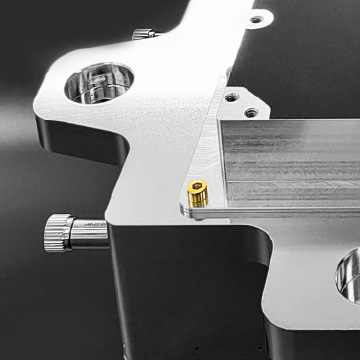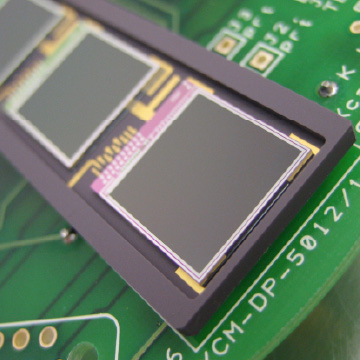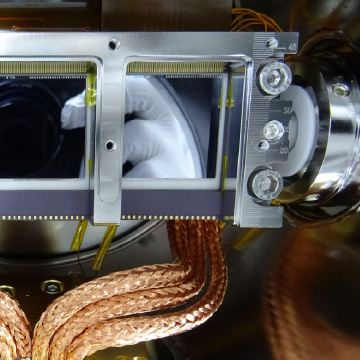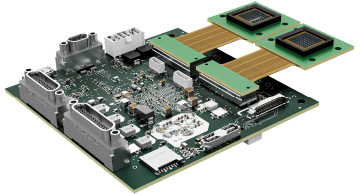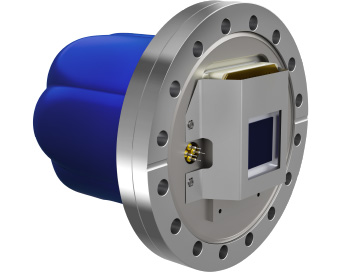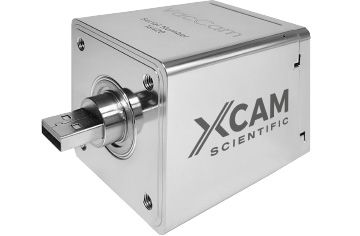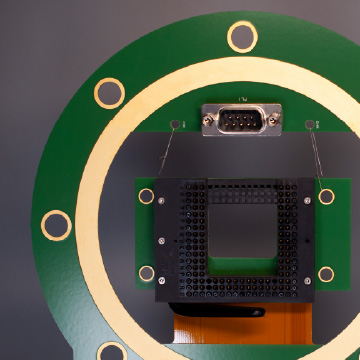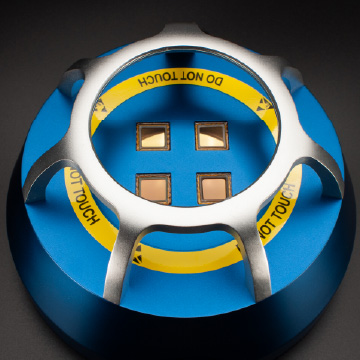



To coincide with our attendance at the Small Satellite Conference in Logan, Utah this week, we’ve produced a mini-newsletter providing a round-up of our current portfolio of Nuscis Space Imaging Systems, including some of the applications that this system can be implemented for. Follow the link below to find out more:
XCAM is pleased to annouce that it has received an extension grant from the UK’s Centre for Earth Observation Instrumentation (CEOI) to continue development of its ground breaking NewSpace. XCAM is pleased to annouce that it has received an extension grant from the UK’s Centre for Earth Observation Instrumentation (CEOI) to continue development of its ground breaking NewSpace Ultra Low-Light Camera for Earth Observation (EO) Applications.
This competitive award follows the successful completion of the project’s first phase and provides funding for an eight-month extension beginning in July 2025. The programme will advance the design and testing of a flight-ready, ultra-low-noise camera system capable of capturing exceptionally high-quality images of Earth — even in extremely low-light conditions.
The CEOI’s continued support recognises the transformative potential of XCAM’s ultra-low-light imaging technology. Once completed, the system is expected to enable a new generation of Earth observation capabilities, including:
Monitoring biodiversity and crop health
Measuring thermospheric wind speeds
Mapping polar ice during winter darkness
These applications will provide valuable insights for climate science, environmental monitoring, and sustainable resource management.
Working in collaboration with The Open University’s Centre for Electronic Imaging, the project team will refine the camera’s architecture to achieve state-of-the-art performance and reach Technology Readiness Level 6 (TRL6).
The compact camera system will be offered to instrument builders and satellite developers worldwide, supporting the rapidly growing micro- and nano-satellite markets.
From NASAs use of XCAMs CIS120 camera to our contribution to HiRISE and CubeSat imaging, this issue highlights how XCAM technology is shaping the future of space exploration. Plus we celebrate 30 years of innovation and CEO Karen Holland’s latest academic recognition. To read the full newsletter click this link:
XCAM has been working with Craft Prospect in their SALIENT project funded by the Centre for Earth Observation Instrumentation to supply a CubeSat formfactor imaging system for the Context Imager. The Context Imager uses imagery provided by XCAM’s NuSCIS system for real-time decision-making in satellite operations. This capability has been developed and tested on the ground in the SALIENT project and is set for implementation in the OPS-SAT VOLT mission, led by Craft Prospect in an ESA funded programme.
For XCAM this will be the first flight of NuSCIS with a CMV4000 CMOS image sensor, paving the way for supply of the system for similar monitoring applications such as rendezvous and proximity operations, guidance and navigation, and situational awareness.
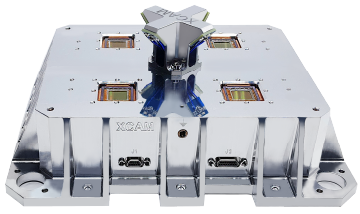
The NuSCIS, NewSpace Camera Imaging System, is a flexible and modular system designed to operate CCD and CMOS image sensors for a range of space applications in low Earth orbit. It is the second generation of space imaging systems following on from the very successful design of C3D for UKube-1 and work undertaken in the development of a space Particle Fall Out monitor for the European Space Agency.
Karen Holland, CEO of XCAM Ltd, said, “We’re seeing a strong interest in our NuSCIS solutions for future space missions, and the work with Craft Prospect funded by the CEOI has been very beneficial in accelerating the route to demonstration in the laboratory and in space.”
Murray Ireland, Head of Engineering at Craft Prospect Ltd said “XCAM have a long and prestigious history in developing imaging systems for the small satellite industry. It has been an immensely valuable collaboration with them under this CEOI project, allowing us to benefit from the use of their NuSCIS imager in our next-generation Context Imager development. We look forward to seeing it in action on our OPS-SAT VOLT mission and working together to deliver the Context Imager and other systems for the small satellite market.”
Award-winning XCAM, designs and manufactures highly specialised complex digital camera systems for challenging scientific, industrial, environmental and space applications. They are one of only a few companies in the world to offer complete bespoke imaging sensor camera solutions. With over 25 years background in the scientific and industrial imaging market, XCAM have a worldwide reputation for their ability, reputation, expertise, and outstanding knowledge in their field.
Craft Prospect Ltd was founded in 2017 to address identified challenges and opportunities in the newspace industry, using state-of-the-art crossover technologies including AI and quantum cryptography. They have developed several products to deliver these technologies into space systems and combine these products with an experienced mission architecture and system engineering approach, allowing optimal and holistic use of these technologies in modern satellite missions.
In this newsletter we report on new projects and developments of our Nuscis electronics for CubeSat and small satellite imaging systems. We share data from our cleanroom Particle Fall Out monitor and are pleased to announce the delivery of our first RIXSCam Mini with our new higher speed readout. Finally, we share some of the events that we’ll be attending in the coming months. Follow the link below to find out more:
UK based XCAM Ltd, world leaders in specialist digital camera systems, are developing a variant of their Nuscis electronics for the context imager in Craft Prospect’s Salient project.
In Salient, Craft Prospect will be using their on-board processing algorithms in a data processing module to perform autonomous detection and decision making for spacecraft operations based on image data provided by XCAM’s Nuscis system. Nuscis will drive two CMOS image sensors to provide real time information to be utilised in beam steering for optical communications, agile pointing of high-resolution cameras or for onboard removal of cloud obscured data.
The work is funded by the UK Space Agency’s Centre for Earth Observation Instrumentation (CEOI), to raise the technology readiness level of new and emerging capabilities. The project will culminate in a laboratory demonstration using simulations and deliverable hardware.
For XCAM, this represents the third variant of Nuscis after the initial contract to develop WindCube was awarded by UCAR (University Corporation for Atmospheric Research) last year. For Windcube XCAM is providing the core Nusics processor, memory and control board, an auxiliary drive board for CCDs and a temperature control board. Here the core Interface Control Board will be used to drive the CMOS image sensors directly. These two variants are complemented by XCAM’s own CEOI funded development of an ultra-low-light camera system for low Earth orbit missions.
Karen Holland, CEO of XCAM Ltd, said, “We’re really excited to be working in close partnership with Craft Prospect on the supply of an engineering model for the development of their context imager. We expect that our stereo CMOS Nuscis system will support a wide range of monitoring applications from satellites ”
Murray Ireland, Head of Products at Craft Prospect Ltd, said, “Our first-generation FLI has been a critical technology in unlocking autonomous capabilities in satellite missions. With our next generation development, we can utilise the Nuscis module’s superior image quality and the latest advancements in embedded AI systems to deliver a context sensor which is far more powerful, configurable and versatile”.
Award-winning XCAM, designs and manufactures highly specialised complex digital camera systems for challenging scientific, industrial, environmental and space applications. They are one of only a few companies in the world to offer complete bespoke imaging sensor camera solutions. With over 25 years background in the scientific and industrial imaging market, XCAM have a worldwide reputation for their ability, reputation, expertise, and outstanding knowledge in their field.
The Centre for Earth Observation Instrumentation was originally established in 2007 to realise an excellent, internationally competitive national Earth observation instrument and technology research and development programme. The CEOI is funded by the UK Space Agency with parallel technology investment from industry. Its key aim is to develop UK innovative technologies to observe Earth from space through the teaming of scientists and industrialists.
Craft Prospect Ltd was founded in 2017 to address identified challenges and opportunities in the newspace industry, using state-of-the-art crossover technologies including AI and quantum cryptography. They have developed several products to deliver these technologies into space systems and combine these products with an experienced mission architecture and system engineering approach, allowing optimal and holistic use of these technologies in modern satellite missions.
UK based XCAM Ltd, world leaders in specialist digital camera systems, have secured over £200,000 grant funding from the UK Space Agency’s Centre for Earth Observation Instrumentation (CEOI), to develop and evaluate a New Space ultra-low-light camera system suitable for use in a range of compact Earth observation instruments in the visible and NIR wavelengths. It is anticipated that the camera system created from this project, will lead to the development of very high resolution, multi-spectral imaging instrument that will transform the way we monitor our Earth in the future for applications such as, solar induced fluorescence effects, night-time imaging for development goals, polar ice mapping, thermospheric wind speed monitoring and many more.
The project will utilise new high frame rate, state-of-the-art sensors developed by collaborator BAE Systems and integrate them into XCAM’s versatile and high-performance ‘Nuscis’ camera system for space imaging applications. Once the new system has been developed, XCAM will perform system characterisation against a number of use-cases and project partners, the Centre for Electronic Imaging (CEI) at the Open University, will conduct radiation tests to up-screen the technology ready for space use, with an early adopter already identified in Michigan Aerospace Corporation.
Karen Holland, CEO of XCAM Ltd, said, “We welcome this valuable grant funding and the partnership generated with BAE Systems, which will lead to an increase in sales for our unique specialist camera systems into our global export markets. We hope to prove through this project that these new sensitive, ultra-low-noise sensors alongside our camera system will transform the performance of compact space imaging cameras leading to new ways of monitoring our planet from space.”
Jane Pavlich, President, Michigan Aerospace Corporation added “Michigan Aerospace is pleased to support XCAM’s efforts to ruggedize low-noise CMOS detectors for space applications. The work that XCAM is undertaking will enable sensitive low-noise cameras to be available for small form factor satellites that enable the creation of observing constellations such as our instrument that will measure neutral winds in the thermosphere from a 6U CubeSat. The system being proposed by XCAM is of interest to us as a candidate for future missions. Michigan Aerospace Corporation is interested in seeing this technology advance and we look forward to supporting XCAM in testing the ruggedized detector systems for future satellite applications.”
Deren Mehmet, from BAE Systems said “BAE Systems’ Sensor Solutions is a global leader in high-performance imaging solutions for the space, defense, and science markets. We recently developed the HWK4123 ultra-low noise image sensor that is capable of imaging in starlight conditions. BAE Systems supports XCAM’s objectives to incorporate the HWK4123 sensor into a new, experimental, small satellite format suitable for a range of Earth observation applications. This technology will create significant new opportunities in the Earth observation and related space domains.”
In a separate project, XCAM will also be joining a team led by Glasgow-based firm, Craft Prospect, to develop the next generation of their Forward-Looking Imager (FLI) technology, also funded by the CEOI.
The Centre for Earth Observation Instrumentation was originally established in 2007 to realise an excellent, internationally competitive national Earth observation instrument and technology research and development programme. The CEOI is funded by the UK Space Agency with parallel technology investment from industry. Its key aim is to develop UK innovative technologies to observe Earth from space through the teaming of scientists and industrialists.
UK based XCAM Ltd, world leaders in specialist digital camera systems, have jointly been awarded grant funding from the UK Space Agency (UKSA) via its International Bilateral Fund (IBF) – Phase 1.
The funded project is being led by the Open University (OU) working with the Indian Space Research Organisation (ISRO), to support the development of X-ray instrumentation for the DISHA mission to study space weather. XCAM as a key partner, will play a vital role in defining a preliminary camera system concept based around the CIS221-X; a novel X-ray detector designed jointly by The Open University and Teledyne e2v and manufactured by Teledyne e2v. In addition to the technical contributions, XCAM will also be evaluating the return on investment to the UKSA for the next phase of development.
This grant funds the initial development of the project, potentially leading on to Phase 2 which could see a further 1.5m in funding next year.
Karen Holland, CEO of XCAM Ltd, said, “We are delighted to have been awarded this valuable grant funding and to play a significant part in strengthening the UK space sector’s partnerships with strategic and emerging space nations. This funding supports an international collaboration for the initial development of the Auroral X-ray Imaging Spectrometer (AXIS) instrument intended to fly on DISHA, the Disturbed and quiet time Ionospheric-thermosphere System at High Altitudes mission.”
Karen continued, “This activity builds on our new versatile and high-performance ‘Nuscis’ camera system for space imaging applications, that is already being adopted for a number of different space missions including ‘WindCube’, a NASA-funded space weather mission due for launch in 2024. Supporting a number of different high-performance imaging sensors enables ‘Nuscis’ to be easily adapted to different instruments such as the AXIS instrument for this project.”
The current funded activity will strengthen the collaboration between the UK parties and ISRO and will prepare a proposal for the full development of the AXIS instrument with a proposed UK contribution in the sensor, detector electronics, detector physics and X-ray science. If successful, Phase 2 will start in 2024 with an aim to complete the UK instrument contribution by 2026.
XCAM will also be supporting another IBF fund project, also led by the Open University, to support the development of a Mars imager concept using the CIS125 detector also manufactured by Teledyne e2v. This will draw on the extensive work already conducted by XCAM on the CIS125 for the TreeView mission.
The UK Space Agency £20 million International Bilateral Fund (IBF) is to support international partnerships that will harness the United Kingdom’s national strengths, support new space capabilities and catalyse investment. Up to £2 million will initially be available from the IBF to help strengthen the space sector’s partnerships with other space nations, with further funding to be made available over the next two years.
https://www.gov.uk/government/news/pioneering-worldwide-space-partnerships-to-boost-uk-innovation
The Disturbed and quiet time Ionosphere-thermosphere System at High Altitudes (DISHA) is a proposed twin satellite aeronomy mission by the Indian Space Research Organisation. It will study the effects of space weather events on the uppermost layers of Earth’s atmosphere.
UK based XCAM Ltd, leaders in specialist digital camera systems, has announced a collaboration with UCAR (University Corporation for Atmospheric Research) to produce a high-quality scientific space system, to observe and record global thermospheric winds that impact radio and GPS. This space mission (WindCube) will be the first time a wind measuring interferometer will be carried on a small CubeSat and will help scientists to improve models of the upper atmosphere and, ultimately better predict impacts to communication systems and satellites.
The WindCube mission, due to launch in 2024, is part of one of the NASA funded H-FORT (Heliophysics Flight Opportunities for Research and Technology) missions and will see XCAM provide an advanced imaging camera system. This camera will be integrated with UCAR’s Fabry-Perot interferometry technology, to fit into a shoebox sized ‘CubeSat’ satellite. At the heart of the camera system is XCAM’s new ‘Nuscis’ SmallSat and CubeSat-compatible space imager enhanced, for WindCube, with additional modular components enabling the imager to utilise a sensitive Electron Multiplying CCD sensor and control the temperature the sensor operates at.
WindCube will operate for around 12 months in low earth orbit (LEO) providing data to study the influence of thermospheric winds heated intensely by the Sun on the Earth’s ionosphere. Previously measurements were taken from the ground with limitations or from large and expensive orbiting platforms. These new space-based measurements from a low-cost small satellite platform, will significantly enhance understanding of this important interaction in the upper atmosphere.
Karen Holland, CEO of XCAM Ltd, said, “We are delighted to be working with UCAR on this unique and valuable mission. Our specialist digital cameras have a worldwide reputation for excellence and to see them being used in this way makes us very proud. Our experience in developing low power, low price point, small form factor CubeSat cameras with proven spaceflight heritage is paying dividends and good news for the future, as we develop the Nuscis system to sell worldwide into different space applications for earth observation, remote sensing, space situational awareness, rendezvous and docking and in-orbit servicing.”
Scott Sewell, Engineering Group Manager at UCAR’s High Altitude Observatory (HAO) and Principle Investigator (PI) of the WindCube mission, added, “The WindCube mission will generate global maps of thermospheric winds by measuring the Doppler shifts of visible light emitted by atomic oxygen within a CubeSat form factor. In order to measure the very weak signals produced by the payload’s Fabry-Perot imager, the camera system is a critical element.”
Award-winning XCAM, designs and manufactures highly specialised complex digital camera systems for challenging scientific, industrial, environmental and space applications. They are one of only a few companies in the world to offer complete bespoke imaging sensor camera solutions. XCAM have a worldwide reputation for their ability, reputation, expertise, and outstanding knowledge in the field.
UCAR is a non-profit consortium of 122 North American colleges and universities focused on research and training in Earth system science. UCAR manages the National Center for Atmospheric Research on behalf of the National Science Foundation. Read more about the WindCube initiative here: https://www2.hao.ucar.edu/windcube
Following an 8-year technical development programme in collaboration with the European Space Agency (ESA), UK based XCAM Ltd, leaders in specialist digital camera systems, are delighted to announce significant further funding from ESA for the manufacture of its Space Particle Fall Out (PFO) Monitor. Due to be ready to launch into space inside a rocket launch vehicle fairing in the summer of 2025 the Space PFO will be the first instrument to measure particulate contamination inside a rocket fairing during, and shortly after launch.
Launch vehicles and their enclosed satellite payloads experience significant degrees of mechanical and acoustic shock and vibration during their short journey into space. Nothing is currently known about the sources and types of particulate contamination inside a rocket fairing during launch, however, it is certain that contamination can seriously affect the performance, accuracy and reliability of the multi-million dollar instruments which are routinely sent into space to study our planet and explore the universe.
Karen Holland, CEO of XCAM Ltd, explained, “We are grateful to ESA for their continued support over the last 8 years in the development, manufacturing and testing of prototypes, of this unique instrument. This next tranche of funding takes us to our final launch goal and we are delighted that ESA have the confidence that XCAM can continue to lead the way on these difficult and complex technology development programmes and deliver to their exacting quality standards.”
The Space PFO Monitor is a complex instrument that provides a remote, automated, real-time method of detecting particulate contamination down to the five-micron level in a rocket fairing during and shortly after launch, and will provide valuable data to demonstrate whether or not precious cargos, such as Earth-observing satellites, stay clean on their way into space. It is designed to withstand the varying vibration, shock, acoustic, pressure, temperature and humidity environments experienced during launch and can be deployed across a wide range of different launch vehicle families.
“Up to now, the cleanliness levels of ESA missions are carefully controlled during assembly, integration and testing, especially for sensitive payloads like those of Science and Earth monitoring. However, what happens to the satellites in the last days on Earth and once they are on their way to orbit remains a mystery. We are looking forward to having a technology game changer in the field of cleanliness and contamination control that will allow us to monitor, and hopefully improve, the particulate contamination levels during launch” says Riccardo Rampini, head of Materials’ Physics and Chemistry section in ESA/ESTEC and technical officer of this activity.
Following the success developing the space system prototypes, XCAM has also adapted the PFO technology for commercial use, and distributes the PFO 1040 real-time surface particulate contamination monitoring system to cleanrooms and clean assembly plants worldwide. A great example of the spin-out of space-derived technology to the wider world.
Award-winning XCAM, designs and manufactures highly specialized custom and low-volume complex digital camera systems for challenging scientific, environmental and space applications. They are one of only a few companies in the world to offer complete bespoke imaging sensor camera solutions. XCAM have a worldwide reputation for their ability, reputation, expertise, and outstanding knowledge in the field.
Find out more here: Space PFO

XCAM Scientific
2 Stone Circle Road
Round Spinney Industrial Estate
Northampton, NN3 8RF, UK